Nuclear Waste heat recycling
The Problem: Overcoming Exergy Waste in Baseload Generation Nuclear power stations like the UK's Torness Advanced Gas-Cooled Reactor (AGR) operate with exceptional operational stability and high baseline thermodynamic efficiency. However, they inherently reject massive amounts of low-grade thermal energy—up to 1.68 GWth per reactor—into the sea via condenser cooling. The engineering challenge is capturing this exergy waste for municipal decarbonization without crippling the plant's delicate condenser pressure ratios, inducing turbine moisture limits, or introducing corrosive seawater into secondary mechanical systems.
The Outcome: A Commercially Viable Decarbonization Infrastructure The analysis proved that a minor strategic sacrifice in electrical output yields massive commercial and environmental returns.
Thermodynamic Trade-off: Quantified the efficiency drop caused by the steam extraction, showing a minimal decrease in net plant electrical efficiency from 39.24% to 37.8%.
Robust Unit Economics: Validated the project's financial viability, projecting a highly attractive Net Present Value (NPV) of £61.68 Million, an Internal Rate of Return (IRR) of 11.7%, and an LCOH of just 11.99 p/kWh over a 25-year lifecycle.
System-Level Decarbonization: Demonstrated that replacing legacy municipal heating with the 4GDH network would reduce regional heating emissions by 75%, eliminating 9,100 tonnes of CO2e annually.
The Approach: Cycle Modification & Techno-Economic Modeling Rather than relying on inefficient downstream heat pumps, this project focused on modifying the plant's internal Rankine cycle to supply a Fourth-Generation District Heating (4GDH) network for 5,000 local dwellings.
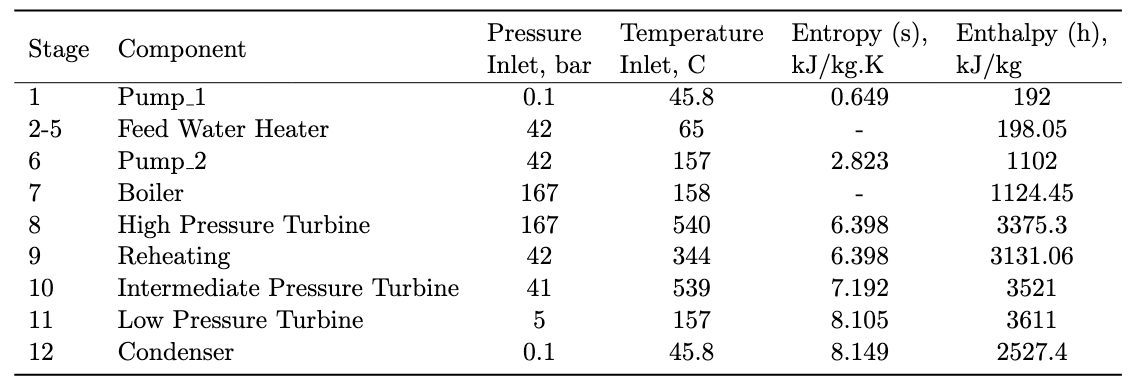
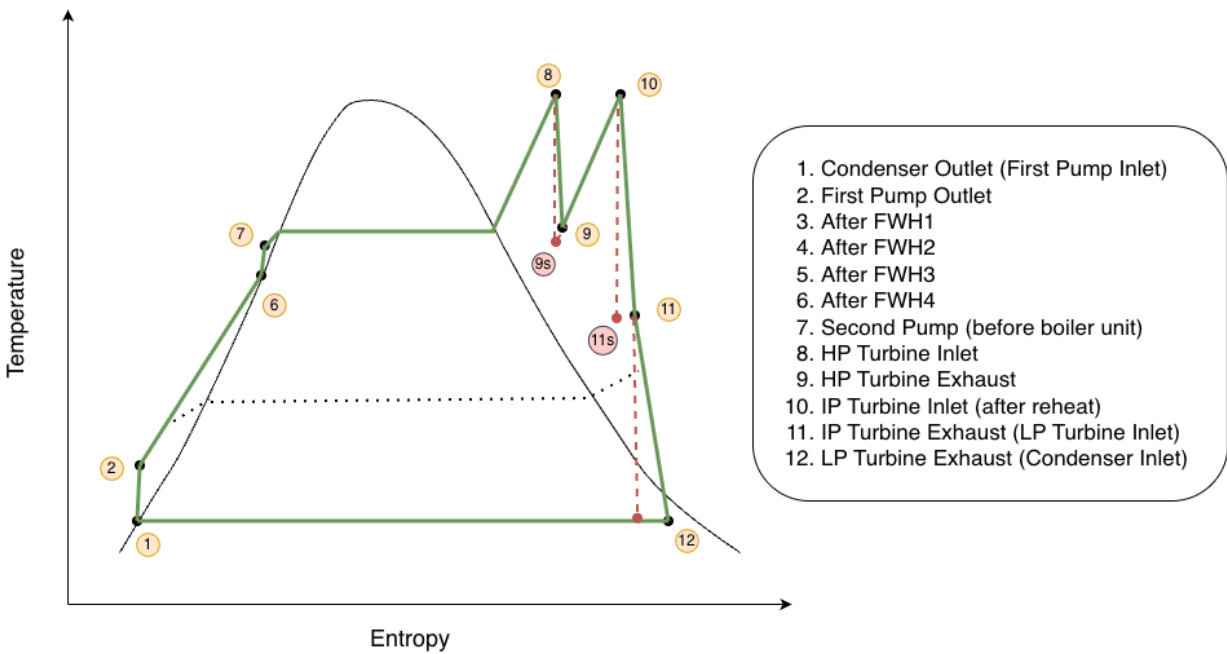
Baseline Thermodynamic Analysis: Modeled the exact state properties (enthalpy, entropy, specific volume) across the Torness Rankine cycle, including regenerative feed-water heating and intermediate reheating, establishing a baseline net thermal efficiency of 39.24%.
Cycle Modification: Engineered a controlled steam bleed strategy, extracting just 1.63% of the total steam mass flow (8.57 kg/s) from the intermediate-pressure (IP) turbine at 5 bar and 152°C.
Heat Exchanger Integration: Routed the extracted steam through a steam-water heat exchanger to elevate the returning district heating water from 30°C to 60°C, providing a stable 18 MWth of usable thermal capacity.
Financial & Environmental Feasibility: Conducted a comprehensive 25-year techno-economic analysis, calculating CAPEX, OPEX, and Levelized Cost of Heat (LCOH), while modeling the exact carbon displacement of removing local gas/oil boilers.