silicon-carbon composite anodes
The Problem: The Capacity vs. Degradation Bottleneck The global transition to renewable energy and electric vehicles is fundamentally bottlenecked by the energy density limits of current energy storage systems. Traditional lithium-ion batteries rely on graphite anodes, which are approaching their theoretical capacity limit of 372 mAh/g. While silicon presents a revolutionary alternative—offering a nearly tenfold theoretical capacity of 3579 mAh/g—its practical application is severely hindered by physical degradation. During the lithiation process, silicon undergoes up to a 300% volume expansion. This extreme swelling causes particle pulverization, electrical isolation, and the continuous, unstable formation of a solid-electrolyte interphase (SEI) layer, leading to rapid battery failure
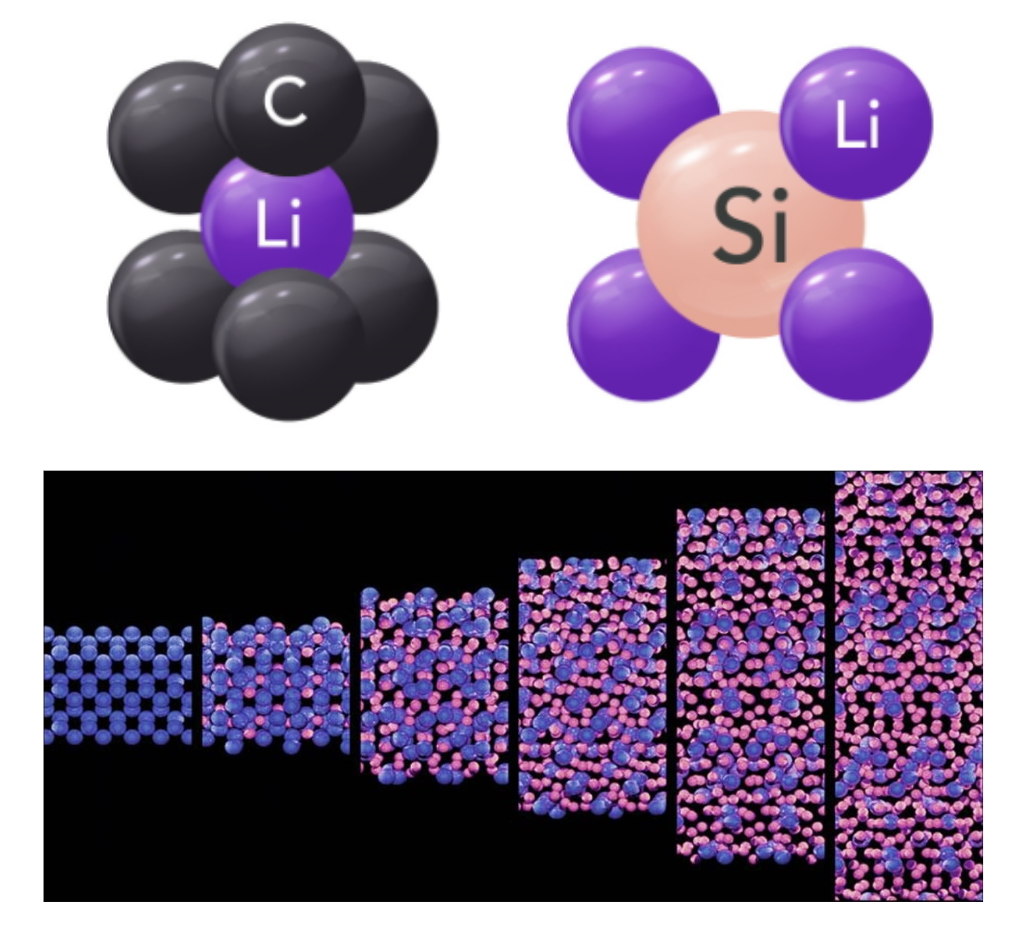
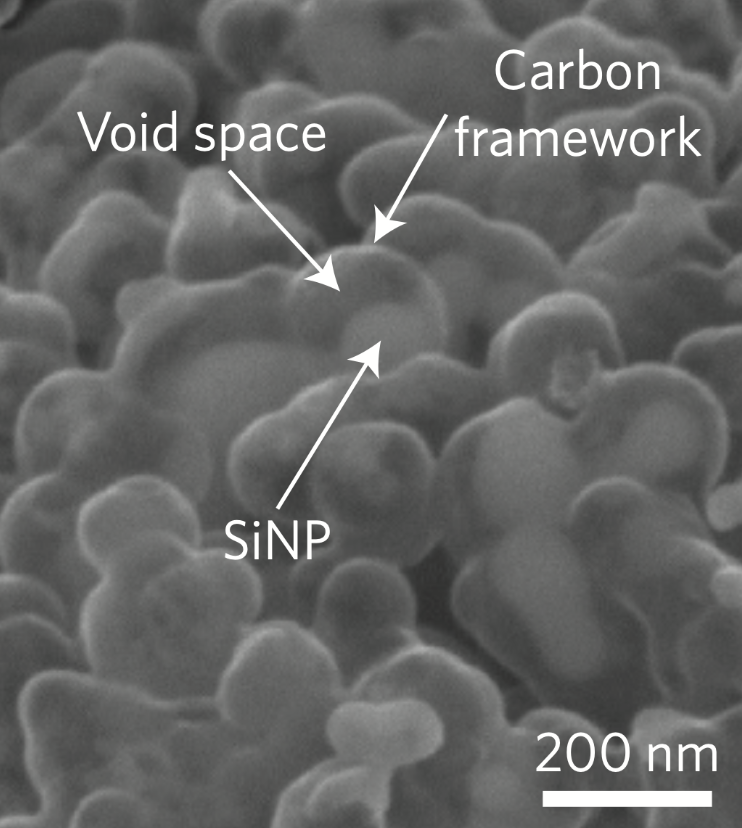
The Approach: Hierarchical Nanostructures & Interface Engineering To bridge the gap between silicon’s theoretical potential and commercial viability, this literature research focused on engineering "hierarchical" silicon-carbon composites capable of accommodating extreme physical stress without sacrificing electrical conductivity.
Void Space Engineering: Designed the synthesis of hollow silicon nanostructures via the magnesiothermic reduction of silica templates. This created intentional internal void spaces that allow the silicon to expand inward rather than fracturing outward.
Double-Layer Carbon Coating: Developed a novel, dual-layer interface strategy to seal and protect the silicon.
Inner Elastic Layer: An elastic carbon buffer layer was engineered to physically clamp the silicon and absorb mechanical strain during the 300% volume changes.
Outer Conductive Layer: A conformal graphene-based outer cage was investigated to retain electrical contact and prevent uncontrolled SEI growth, ensuring the particle remains electrically active even if internal fracturing occurs.
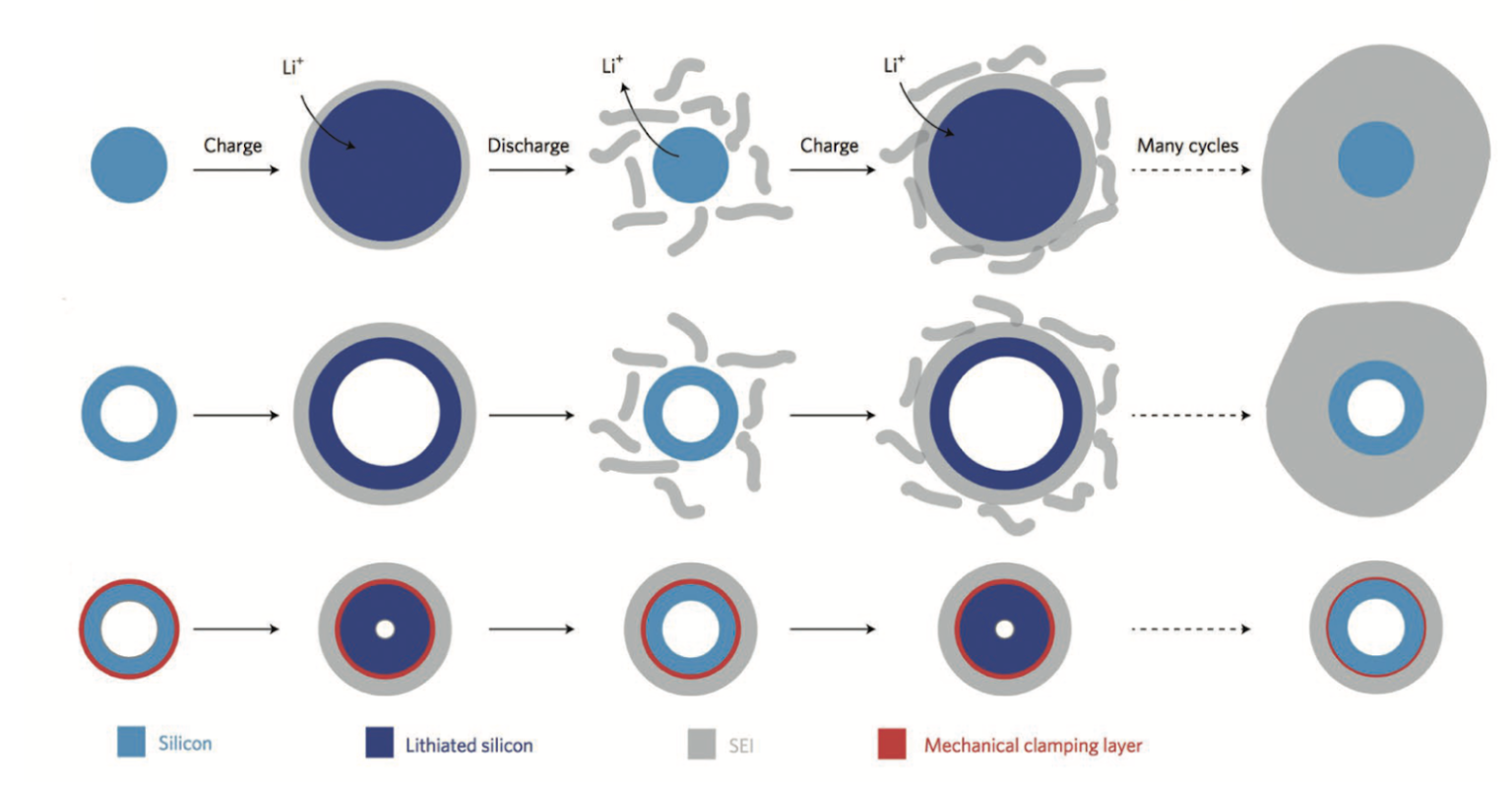
The Outcome: Commercial-Scale Viability for High-Density Storage By abandoning traditional rigid electrode designs in favor of elastic, composite architectures, this methodology establishes a clear pathway for the industrial-scale implementation of silicon anodes.
Targeted Lifecycle Stability: Engineered to achieve stable cycling performance of over 1000 cycles at 80% capacity retention.
Massive Capacity Gains: Projected to maintain a high practical capacity of >1500–2000 mAh/g, effectively quadrupling the performance of standard graphite.
System-Level Impact: Successful implementation of this specific composite architecture would reduce overall battery volumetric changes by an estimated 30%, making high-capacity silicon anodes physically viable for dense EV battery packs and grid-scale storage systems.